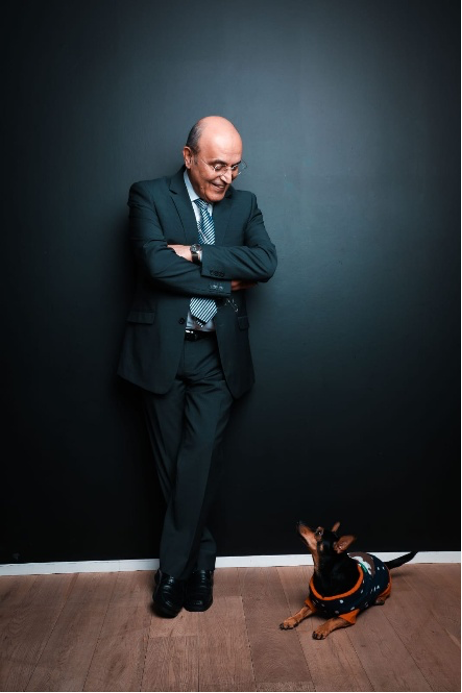
Hassan Y. Naim, PhD, Professor of Biochemistry
Hassan Y. Naim, PhD, is a Lebanese biochemist and cell biologist. Born in Beirut, Lebanon, he studied Chemistry and Biochemistry in Beirut before pursuing his PhD in Biochemistry at the University of Bern, where he focused on the role of cell surface glycoproteins in blood platelets in blood hemostasis.
Following his PhD, Hassan worked as a postdoctoral scientist in the Department of Biochemistry at the University of Lausanne, where he conducted research on the immunochemistry of cytotoxic T-cell antigens. He then returned to Bern to initiate a new area of research on the trafficking and function of intestinal brush border disaccharidases, including sucrase-isomaltase, maltase-glucoamylase, and lactase-phlorizin hydrolase. This phase of his scientific career marked the development of his passion for understanding the biochemistry and cell biology underlying carbohydrate (mal)absorption, with a focus on the implications of protein misfolding and trafficking in enzyme function deficiency.
With an award from the Swiss National Science Foundation, Hassan moved to the University of Texas Southwestern Medical Center at Dallas, USA to work on cloning, expression, and trafficking of intestinal lactase. He was subsequently recruited to lead a research group on protein secretion in mammalian cells at the University of Düsseldorf, Germany, which was supported by the Ministry for Research and Education (BMBF).
In 1997, Hassan accepted the call for a Professorship and Chair of Physiological Chemistry (Biochemistry) at the University of Veterinary Medicine Hannover, where he continued his work on protein and membrane transport in health and disease. His term ended in September 2022, but he is still as active as ever in performing research and mentoring students.
Throughout his extensive scientific career spanning over three decades, Hassan has employed an interdisciplinary research approach at the interface of biochemistry, cell biology, and molecular medicine. His focus has been on protein and membrane trafficking, particularly in the context of gastrointestinal disorders and lysosomal storage diseases. Hassan's research has aimed to elucidate how genetic variants of intestinal or lysosomal proteins affect their folding, trafficking, sorting, and function, and how these alterations contribute to disease pathogenesis.
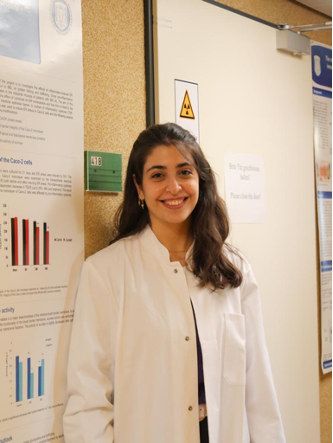
Stephanie Tannous, PhD
Originally from Lebanon, Stephanie completed her Master's degree in Molecular Biology at the Lebanese American University, where an internship in Professor Naim's laboratory first sparked her interest in gastrointestinal research. Inspired by this experience, she joined the Naim lab group in 2021 to pursue her PhD, deepening her expertise in the molecular and biochemical underpinnings of gastrointestinal disorders. Since transitioning to a postdoctoral position in 2024, she has further broadened her research, developing hands-on expertise in both the congenital sucrase-isomaltase deficiency (CSID) landscape and the broader field of lysosomal storage diseases. Outside the laboratory, she finds joy in the kitchen, where she enjoys cooking and baking—whether preparing nostalgic Lebanese dishes that connect her to her heritage or experimenting with Western-style baked goods.