Nachwuchsforschungsgruppe Käufer
Neuroinfectiology
Leitung: Dr. Christopher Käufer
Organisatorisch angebunden an die AG Richter Assencio.
Forschungsprojekte
Die Nachwuchsforschungsgruppe untersucht, wie Virusinfektionen das Gehirn langfristig verändern und das Risiko für neurodegenerative Erkrankungen erhöhen. Drei Projekte bilden derzeit den Schwerpunkt.
DIVA — Sex-dimorphe Immunsignale in Astrozyten nach viraler Herausforderung. Warum wirken Viren im weiblichen und im männlichen Gehirn unterschiedlich? DFG-Schwerpunktprogramm SPP 2561 „SEX and GLIA", gemeinsam mit Prof. Dr. Franziska Richter Assencio und Prof. Dr. Gülşah Gabriel.
PrimeND — Viral Priming of Neurodegeneration. Hinterlässt eine Virusinfektion in jungen Jahren eine latente Anfälligkeit für neurodegenerative Proteinopathien? VolkswagenStiftung, Ausschreibung NEXT – Rethink Neurodegeneration!
VENOM — Research Integration Unit der TiHo zu Virusinfektionen als Risikofaktor für Neurodegeneration. Hypoxie, Neuroinflammation und Proteinopathie als verbindende Mechanismen. Projektmanagement und Koordination.
Ausführliche Projektbeschreibungen: https://www.tiho-hannover.de/kliniken-institute/institute/institut-fuer-pharmakologie-toxikologie-und-pharmazie/forschung/ag-richter-assencio/projekte
Drittmittelförderung
PrimeND — Viral Priming of Neurodegeneration. VolkswagenStiftung, Ausschreibung NEXT – Rethink Neurodegeneration!, Projektnummer 0203783. 1.997.460 €, 01.01.2027 – 31.12.2031. Rolle: Projektleitung (PI).
DIVA — Sex-dimorphe Immunsignale in Astrozyten nach viraler Herausforderung. DFG, Schwerpunktprogramm SPP 2561 „SEX and GLIA", seit 01.10.2026. Rolle: Projektleitung (PI).
VENOM — Research Integration Unit der TiHo. MWK Niedersachsen und VolkswagenStiftung, Ausschreibung „Potenziale strategisch entfalten", seit 2026. Rolle: Projektmanagement und Koordination, keine eigenen Mittel.
Forschungsschwerpunkt
Bridging Infections, Neuroinflammation, and Neurodegeneration
Our group investigates how acute infectious and inflammatory insults—particularly viral pathogens—trigger chronic neurodegenerative processes and proteinopathies. We aim to identify the mechanistic links between pathogen-induced neuroinflammation and the onset of diseases such as Parkinson's, following a One Health perspective that bridges veterinary and human medicine.
Christopher Käufer, PhD Group Leader (Habilitand)
Core Research Areas
- Pathogen-Driven Proteinopathy: Investigating the role of viral triggers (e.g., SARS-CoV-2, Zika, TMEV) in the accumulation of alpha-synuclein and other neurodegenerative markers.
- Neuro-Immune Interactions: Dissecting the contributions of peripheral immune cell infiltration and resident microglia to CNS damage and long-term neurological sequelae.
- Sex Differences in Neuroinfection: Researching how sex-specific factors and endocrine metabolism influence neuroinflammatory outcomes (Active focus within the COFONI network).
Methodological Expertise
We utilize a multidisciplinary approach to bridge the gap from basic mechanisms to clinical relevance:
- Advanced In Vivo Models: Specialized models for viral encephalitis, synucleinopathies, neurodegeneration and blood-brain barrier pathology.
- Pharmacological Characterization: Rigorous evaluation including dose-finding studies, pharmacokinetic (PK) profiling, and adverse effect assessment.
- Molecular Pathology: High-resolution analysis of protein homeostasis, neuroinflammation markers, and glial-neuronal interactions.
- Behavioral Phenotyping: Longitudinal assessment of motor and cognitive functions in neurodegenerative and post-infectious models.
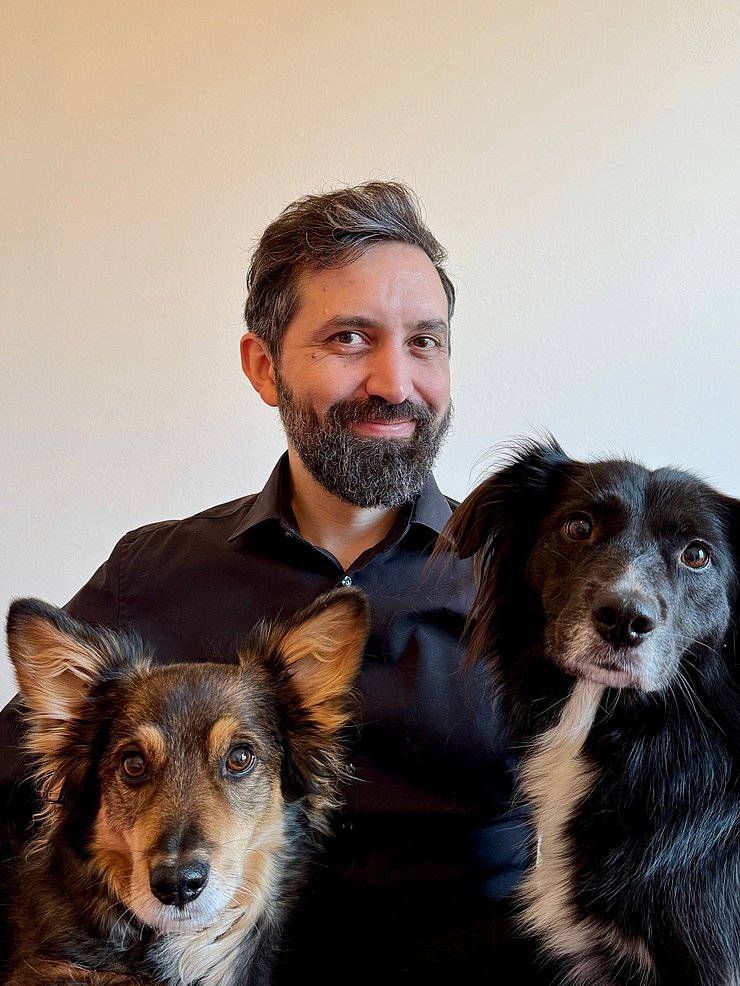
Gruppenleitung
Christopher Käufer, PhD, DVM – Group Leader (Habilitand)
Neuroinfectiology and Neuroinflammation
Department of Pharmacology, Toxicology and Pharmacy, University of Veterinary Medicine Hannover
Publikationen der Käufer-Gruppe
Find out more on Orcid.org
Details anzeigen
Details anzeigen
Details anzeigen
Details anzeigen
Details anzeigen
Details anzeigen
Details anzeigen
Details anzeigen
Details anzeigen
Details anzeigen