
Stem cell-derived models for neurotoxicology, neuropharmacology, and neuroinfectiology
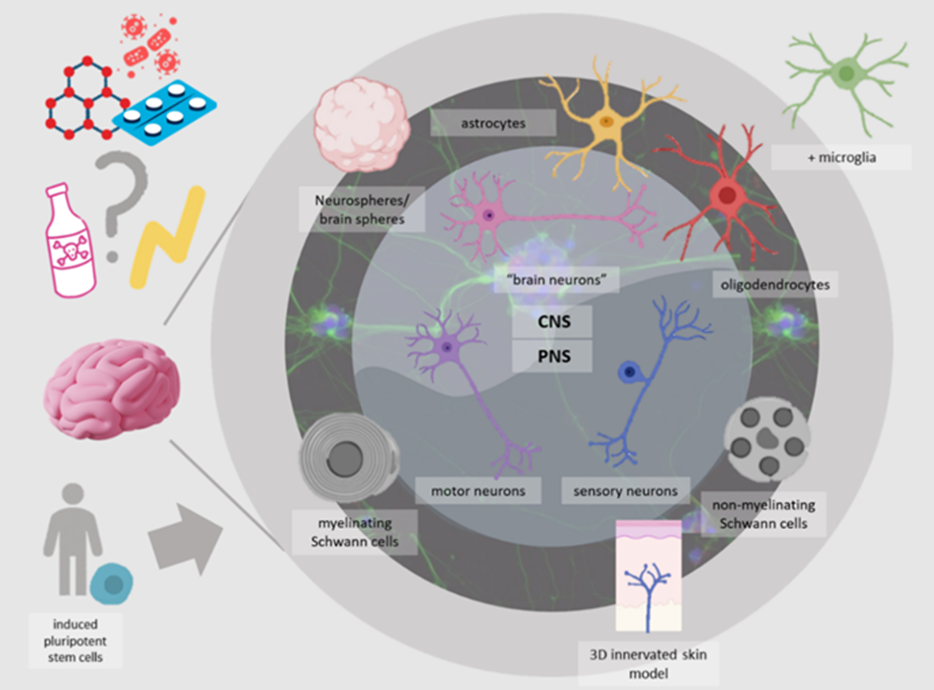
The focus of the research group is on the development and application of stem cell-based models (iPSCs) that mimic the nervous system and thereby contribute to the reduction of animal experiments according to the 3R principle (Replace, Reduce, Refine). These models are used to address questions in neurotoxicology, neuropharmacology, and neuroinfectiology: Chemicals and drugs are tested for their toxicological and pharmacological effects on the nervous system, as well as how infections disrupt nervous system development – for translational solutions in human and veterinary medicine (One Health).Neurotoxicology and neuropharmacology
The working group tests the potency of botulinum neurotoxins in iPSC-derived motor neurons to develop animal-free alternatives to animal testing in pharmacological potency assays. Using myelinating Schwann cells and neurons in 3D models, chemicals are examined for demyelinating properties on peripheral nerves – as part of an EU project, innovative animal-free models for chemical risk assessment are developed. In an innervated skin model, the working group quantifies how toxic and pharmacological substances influence sensory neurite outgrowth, modulate neuropeptide release, and alter gene expression under chronic pain conditions, enabling animal-free testing of new agents against chronic pain. These efforts are complemented by developing a model to test neuroprotective effects in intrauterine growth restriction during embryonic-fetal development.
Neuroinfectiology
Neurospheres, as an iPSC-based model of brain development, are used to investigate the effects of pathogens such as Listeria monocytogenes or Venezuelan equine encephalitis virus (VEEV): We analyze infection mechanisms of neural and glial cells, impairments in differentiation, neurite outgrowth, and migration – including network analyses using multi-electrode arrays and multi-OMICS approaches. These studies are complemented by zoonosis research in species-specific intestinal organoids.
Proteoglycan research
Additionally, we work on visualizing and quantifying changes in proteoglycan structures on neural cells in 3D models following exposure to toxicological and infectious stressors.

