Teaching
Anatomy for Students of Veterinary Medicine
The topographic body regions are taught in blocks in which macroscopic anatomy, microscopic organology and embryology are dealt with in parallel. This system is designed to make it easier for students to understand the interrelationships.
The approach is supported by compulsory elective courses, which are often carried out in cooperation with the clinicians at the TiHo, but also with scientists of the Institute of Physiology.
The regular participation of lecturers from the Institute for Anatomy in courses at the clinics throughout the veterinary degree program ensures that anatomical knowledge is deepened.
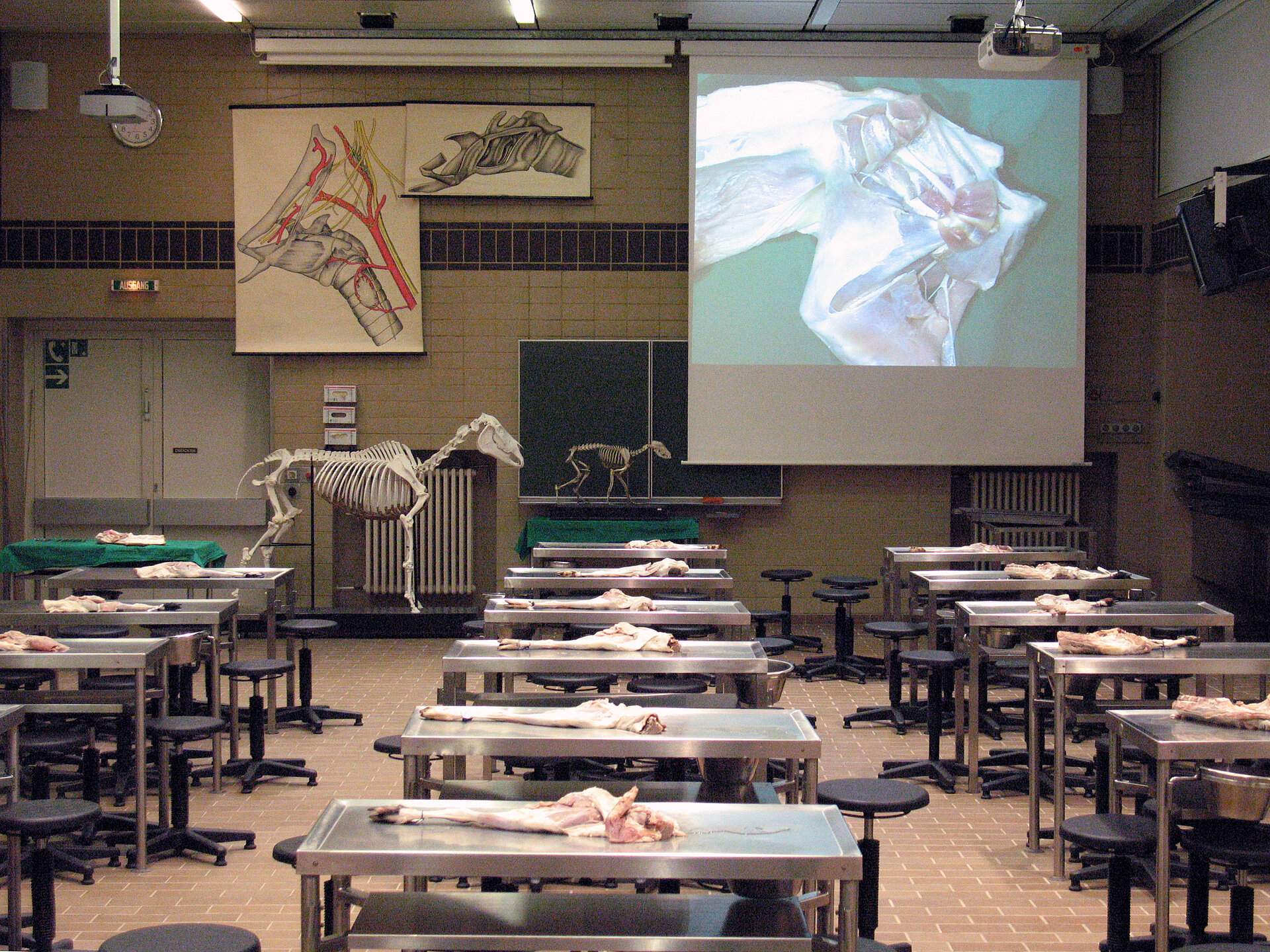
To support teaching, a ceiling visualizer has been installed which, in addition to the video technology, allow parallel projection of live images on projector screens in both dissection rooms. The same technology is used in the lecture hall of the Institute of Physiology in order to effectively demonstrate specimens to students even at the back of the lecture hall.
For histology lessons, which traditionally take place in the pathology course room, projection technology is also used, which allows microscopic images and presentations to be projected in parallel onto large projector screens.
© M. Bewarder
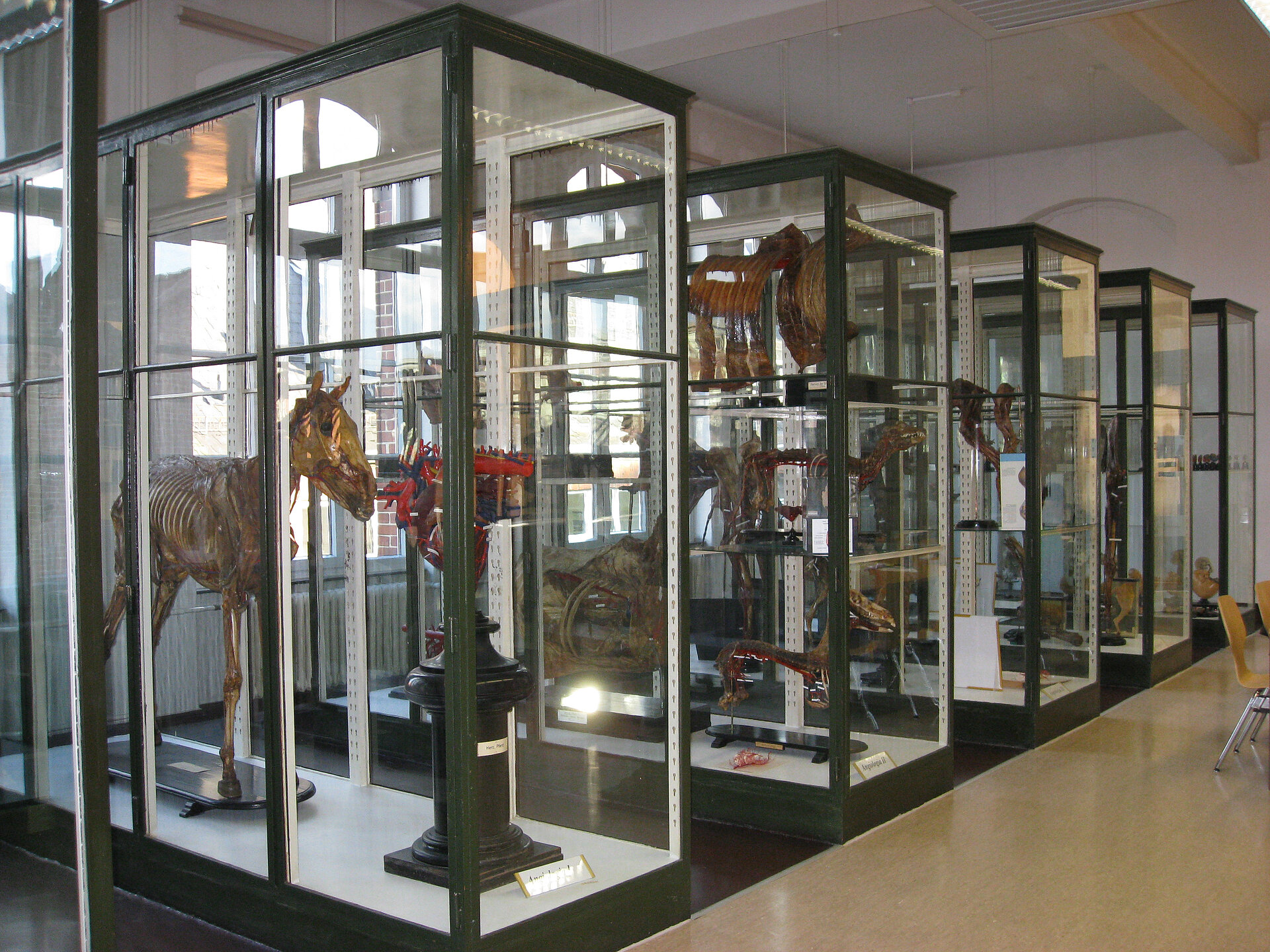
Furthermore, the Institute for Anatomy has a long tradition of offering various opportunities for self-study. Students can use the generously equipped Collection of the Institute for Anatomy, which also contains some historical specimens, for self-study during office hours.
The e-learning opportunities, in particular the Casus cases, are being continuously expanded. The "virtual microscope" initiated by Ralph Brehm, as well as the "Histology learning program" founded by Rudolf Schwarz and continued by Hagen Gasse, will serve as a medium to support studies. In addition, the Institute for Anatomy has extensive experience in the production of video films, the scope of which was significantly increased during the COVID-19 pandemic.
Veterinary training and further education
Colleagues from the Institute for Anatomy provide lectures in veterinary training and further education.
Future prospects
The subjects of anatomy, histology and embryology remain classic basic subjects of (veterinary) medical studies. In line with modern requirements, the focus is on practical courses. In addition to basic topics, research at the institute deals with various projects with clinical relevance and thus remains a mirror of current research on diagnostic and therapeutic procedures in the clinics.