| Project leader: | Prof. Prof. h. c. Dr. Ursula Siebert |
|---|---|
| Scientific staff: | Dr. habil. Maria Morell |
| Project term: | 04.2025 - 03.2026 |
| third-party funds provided by: | University of Glasgow |
Project description
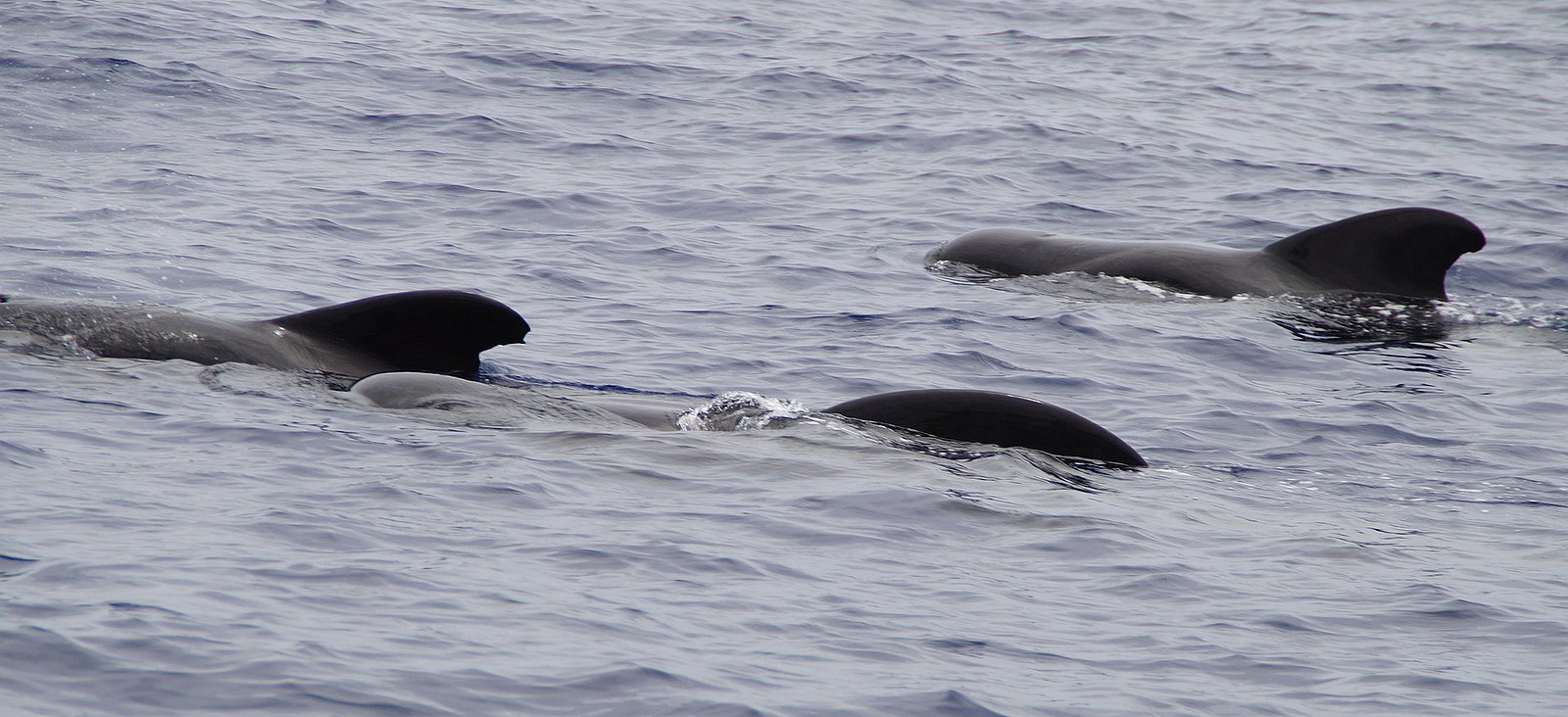
The ears of 15 long-finned pilot whales (Globicephala melas) that mass stranded on July 2023 and on July 2024 in Scotland were collected and fixed during the comprehensive post-mortem examination. They were subsequently sent to ITAW for inner ear analysis. Several complementary analysis techniques will be used to evaluate the ears, depending on the preservation status of the sample. Specifically, techniques optimized in cetaceans such as scanning electron microscopy or immunofluorescence (and histopathology for the less fresh individuals) will be performed to determine whether an animal suffered a hearing loss. With scanning electron microscopy it is possible to observe evidence of lesions within the sensory cells at very high resolution, which can be distinguished from post-mortem decomposition artifacts. On the other hand, with the immunofluorescence technique that we have implemented for ears of marine mammals, we can use a combination of several markers to label the sensory cells and associated neurons at the same time. In addition, we can distinguish between newly formed lesions (that could be associated to the stranding) from old ones. Finally, histopathology is ideal to detect hemorrhages and infections that could have impaired the hearing of the animal, as well as the evaluation of the spiral ganglion neurons, which are the neurons that bring the auditory information from the inner ear to the brain. Hearing impairment can be caused by several factors, including noise exposure, age, ototoxic drugs exposure, pollutants, infections, and congenital disorders. If cases of hearing loss are found, we will evaluate which could be the most likely causes. Including the inner ear collections and analysis within the post-mortem examination protocol in stranded cetaceans (and mass stranded, even if the logistics associated are even more challenging) is essential to detect potential cases of hearing loss, which is particularly relevant in cetaceans that use hearing for all their vital activities.
Contact person
Stiftung Tierärztliche Hochschule Hannover
Institute for Terrestrial and Aquatic Wildlife Research
Werftstr. 6
25761 Büsum
Dr. habil. Maria Morell
Phone: +49 (0)511-8568178
e-mail schreiben